


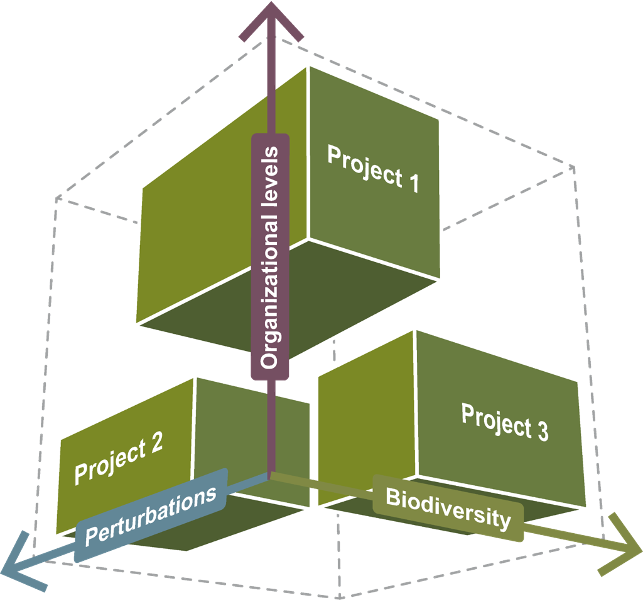
Scientists within GreenRobust will investigate robustness in particular biological contexts in Research projects, which will capitalize on the multidisciplinary combination of expertise in the research environment of the cluster to tackle specific questions, pertaining to one or more of the designated Research axes. Individual research projects will be collaborative in nature, and granted through yearly internal competitive calls.
The role of vascular plasticity in mediating robustness against water availability fluctuations
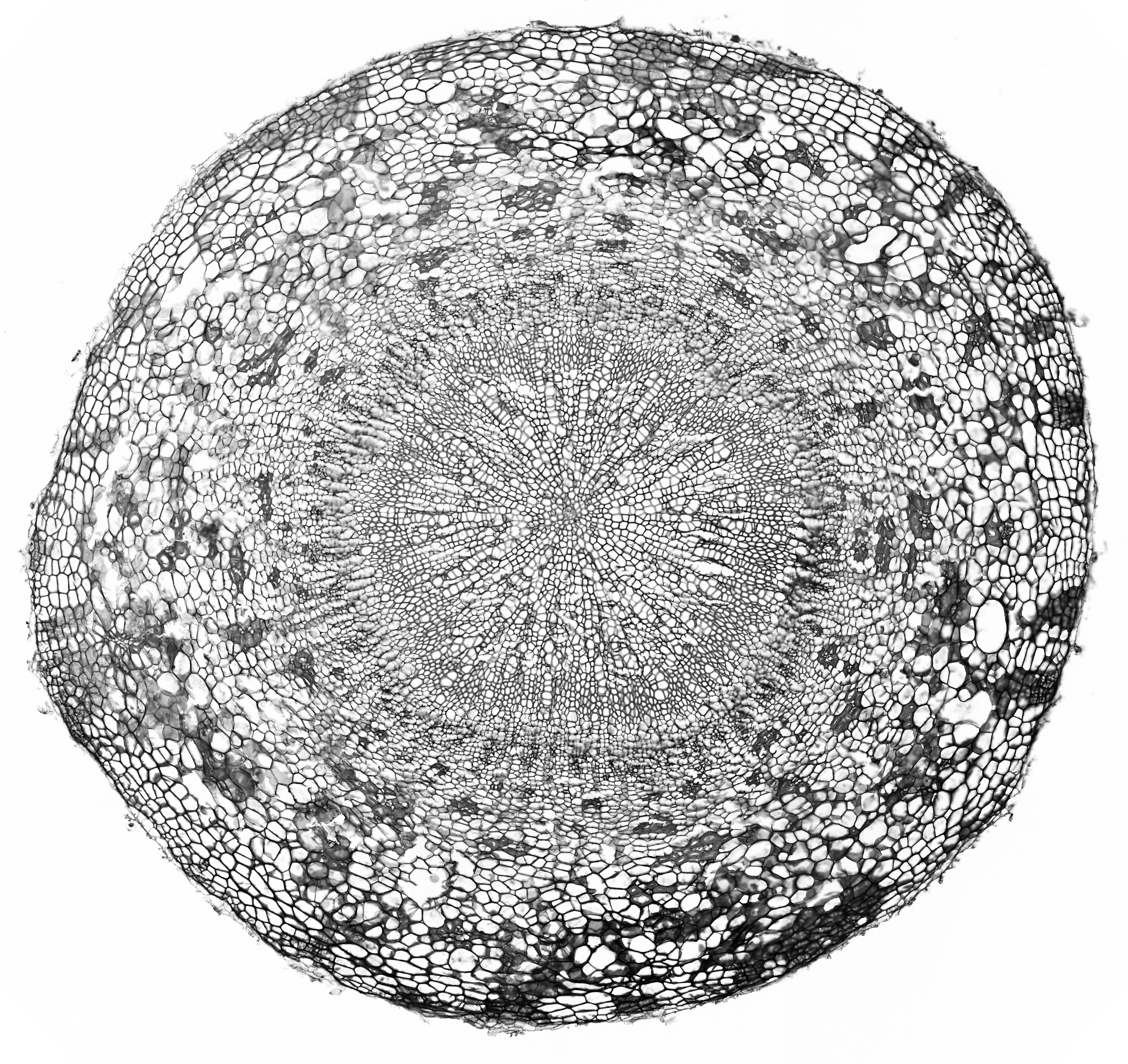
During our project, we aim to reveal the role of physiological and developmental plasticity of vascular tissues in adapting to reduced water availabilities as a model for how plants achieve physiological robustness under changing environmental conditions. As modulators of vascular plasticity, we will investigate and compare the impact of abiotically regulated internal effectors, and infections by geminiviruses as external biotic effector. Our aim is to generate an unprecedented systemic view on plant robustness against water level fluctuations by integrating molecular, anatomical and whole plant phenotypes within knowledge-informed computational models.
LEAP- LEveraging ecological theory for plant robustness Across scales: trade-offs and synergies among robustness traits in individuals for Population stability
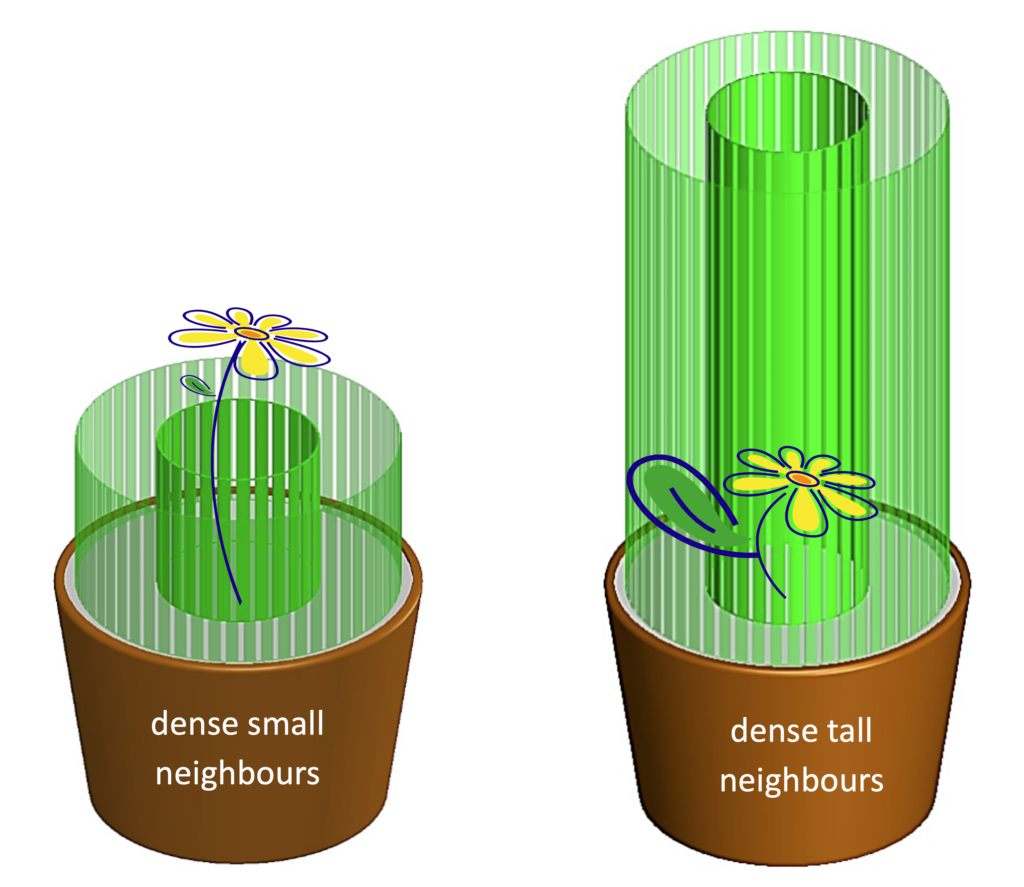
LEAP addresses the obvious but understudied
robustness of plants that do not grow alone.
Namely, we ask whether traits conveying
individual robustness to perturbations can
be scaled to a population level, where traits associated with competitive ability, which often exhibit trade-offs with abiotic stress responses, play a role. LEAP combines
two GreenRobust perturbations
(heat, drought – axis A) with plant-plant
interactions. It addresses molecular,
cellular, physiological and mechanical
aspects in ecological experiments which
bridge across levels of biological organisation (axis B).
We compare several GreenRobust
target species, in particular Hordeum vulgare
(and H. spontaneum), Thlaspi arvense, and, for comparative mechanistic insight,
A. thaliana (axis C). Overall,
we leverage our interdisciplinary
expertise to test for gene-to-population level robustness relationships, utilizing synergies among eco-evolutionary, breeding and molecular expertise.
RegenerateRobust – Elucidating the interplay of
temperature and autophagy in plant regeneration
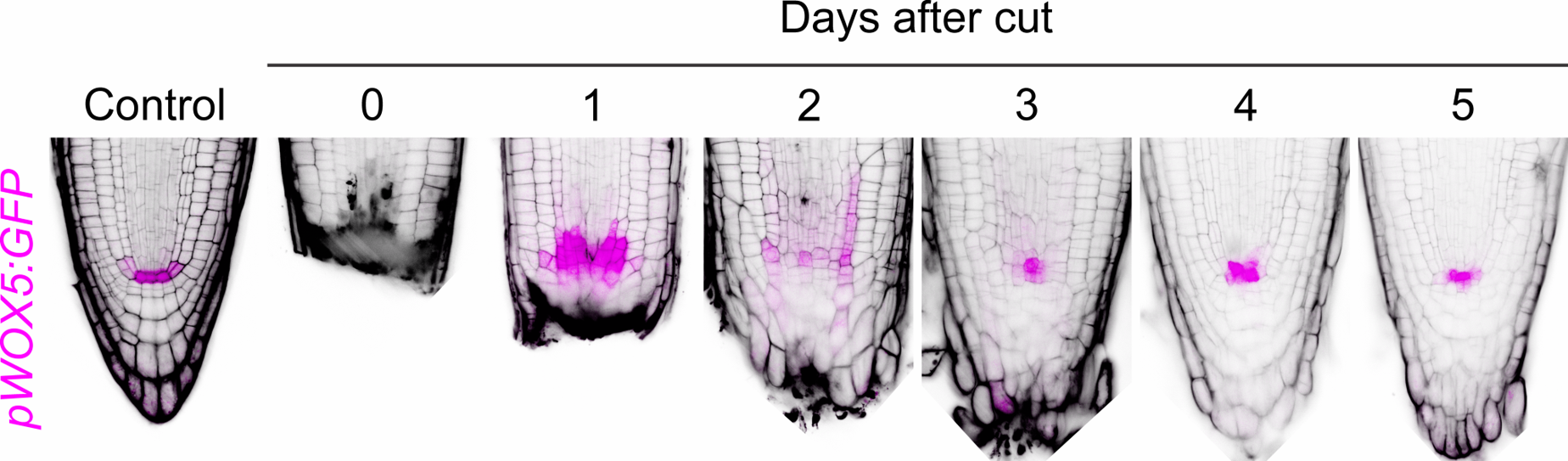
RegenerateRobust investigates how ambient temperature shapes plant regeneration by bridging developmental biology, cell biology, and mathematical modeling. The central premise is that temperature simultaneously promotes regeneration through auxin-dependent developmental pathways and threatens it by overwhelming cellular quality control — specifically autophagy, the cytoplasmic remodeling machinery that clears damaged components after wounding. By comparing species with divergent regenerative capacities across a temperature gradient, the project seeks to identify the tipping points where beneficial warmth becomes destructive, and to capture these transitions in predictive mathematical models parameterized by single-cell transcriptomic and proteomic data. The integration of mechanistic modeling with high-resolution molecular datasets is designed to connect gene regulatory circuits to tissue-level regeneration outcomes, enabling evolutionary comparisons and ultimately informing strategies to enhance regeneration in temperature-sensitive crop species.
Systemin signaling diversity as robustness model: from conserved herbivore defense to neo-functionalization of plant peptide ligands
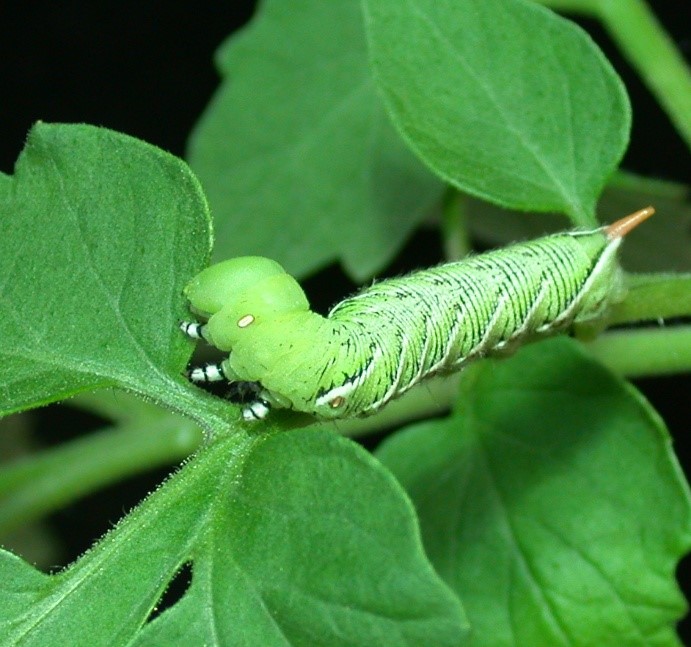
Plants have evolved sophisticated
peptide-based signaling systems to defend themselves against herbivores, and the
systemin (SYS) peptide family in Solanaceae
plants offers a compelling window into how
this defense machinery works. Our recent
discovery of over 100 SYS-like peptides
across 33 Solanaceae species, along with
multiple systemin paralogs in tomato itself,
reveals an unexpectedly diverse signaling
landscape in which closely related peptides
activate overlapping yet distinct defense
pathways through the same receptor.
This project investigates how plants
achieve robust herbivore defense by
balancing deeply conserved signaling
modules with lineage-specific innovations,
focusing on how peptide sequence variation
shapes receptor recognition and downstream
responses across species. By combining biochemical assays, CRISPR genetics,
comparative transcriptomics, and
evolutionary genomics,
we aim to uncover the molecular
and evolutionary logic that allows the
systemin signaling system to remain effective across a diverse and ecologically successful plant family.
MultiRobust – Advancing theory on the multi-level robustness of plant systems
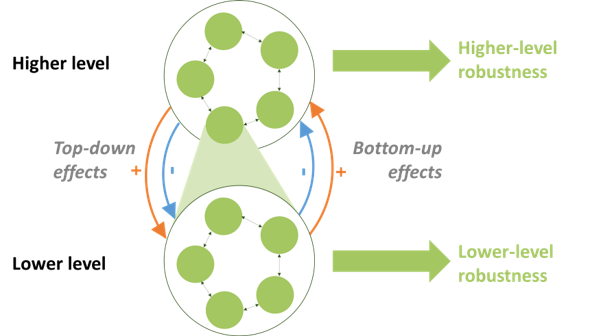
Plant systems form hierarchical networks across multiple organizational
levels: populations consist
of individuals, which consist of organs, which consist of cells, which
consist of molecules resulting from
gene regulation networks.
Robustness, the ability to maintain
function despite perturbations,
is linked across levels through positive
and negative bottom-up
and top-down effects.
In this project, we aim to
develop a general modelling
framework to study multi-level
robustness.
Our aim is to understand
(1) How network structure
determines robustness links across
levels and
(2) how constraints and evolutionary processes shape multi-level robustness.
Cross-Scale Mechanisms of Trichoderma-Induced Robustness Across Land Plants
This GreenRobust project investigates how beneficial fungi of the genus Trichoderma induce robustness across plant lineages and perturbations, which cellular pathways are engaged, how these signals interact with the resident microbiome, and how these multi-scale processes can be predicted or generalized across species. Using two model plants from different land plant lineages (the liverwort Marchantia polymorpha and the eudicot Arabidopsis thaliana) subject to different perturbations (heat stress and inoculation with bacterial pathogens), we aim to dissect the molecular mechanisms underlying Trichoderma-induced robustness. In parallel, we will use Machine Learning to exploit newly generated and published datasets to resolve plant robustness across scales and generate a unified, predictive framework for plant robustness.