

A Cross-Scale, Multidisciplinary Strategy
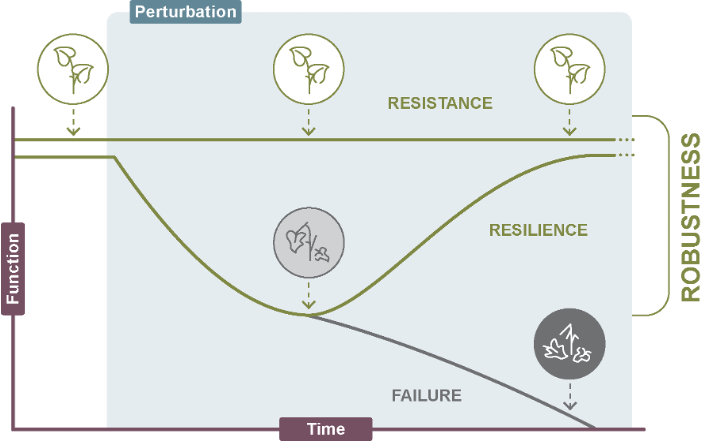
Robustness is the ability to maintain vital functions in the face of changing conditions.
Robust plant systems are essential for maintaining natural and agricultural ecosystems and the services they provide to humanity.
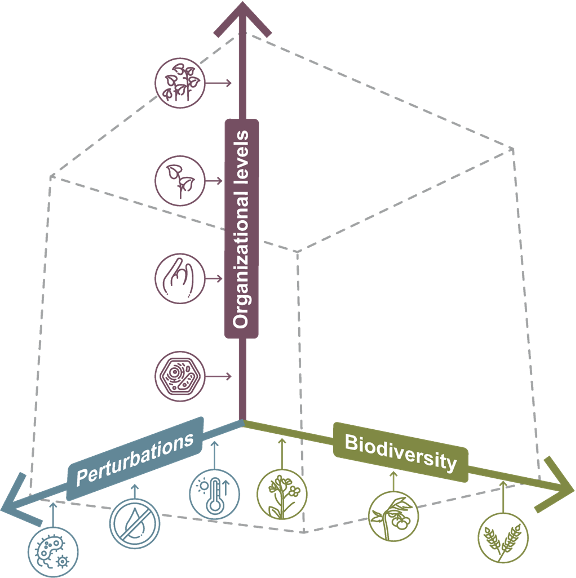
GreenRobust takes a uniquely integrative approach by studying plant responses to environmental challenges across multiple levels of biological organization—molecules, cells, tissues, organisms, and populations.
The research focuses on key perturbations such as:
- Abiotic stress: heat and drought
- Biotic stress: pathogens and pests
These are studied across a carefully selected set of plant species, including model organisms, crops, and wild relatives, enabling comparative and evolutionary analyses.
Three Research Axes
The research program is structured along three interconnected axes:
- Robustness across perturbations
How plants respond to environmental stressors such as climate extremes and pathogens - Robustness across biological levels
How stability emerges from molecular processes up to ecosystem dynamics - Transferability of robustness principles
How generalizable robustness mechanisms are across species and contexts
Together, these axes define a comprehensive research space that enables discovery of universal and system-specific principles of robustness.
Data-Driven Discovery
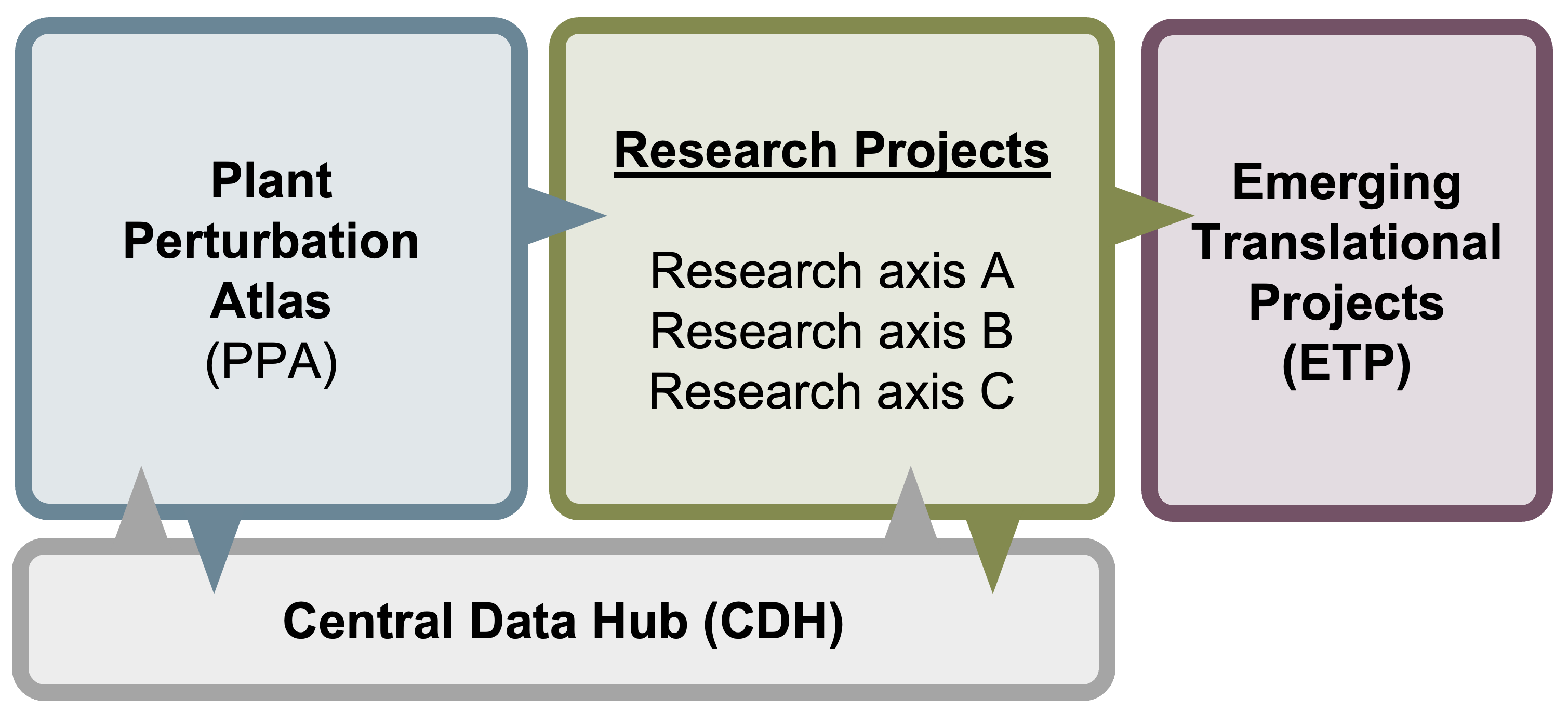
A central innovation of GreenRobust is the Plant Perturbation Atlas (PPA)—a large-scale, standardized dataset capturing plant responses to environmental challenges across species and biological scales.
This effort is supported by the Central Data Hub (CDH), which ensures high-quality, interoperable data and enables advanced analyses using:
- machine learning
- causal inference
- mechanistic modelling
- multi-level data integration
This combination of experimental and computational approaches allows GreenRobust to develop predictive models of plant robustness.